
Most people who become referral partners do it by accident. They mention a tool to a colleague, the colleague signs up, and someone tells them later there was a commission they could have earned. Then they go looking for how referral programs actually work.
This guide covers the basics from the partner's perspective: what a referral partner is, how to pick the right program, how to make your first referral so it actually gets credited, and how attribution and payouts work. We'll use Giftronaut's program as the worked example throughout — the mechanics are clearly documented and representative of how most well-run B2B programs operate.
TL;DR
- A referral partner earns commission by introducing companies to a product — no sales experience, no audience size requirement, no cost to join.
- For people you know personally, always use the lead form (not just an Affiliate Link) — it gives you priority attribution regardless of what links they later click.
- Giftronaut's program: 5% on every qualified order for 12 months, no cap per customer, 180-day lead attribution window, monthly payout via prepaid card or Choice Card — free to join.
What Is a Referral Partner?
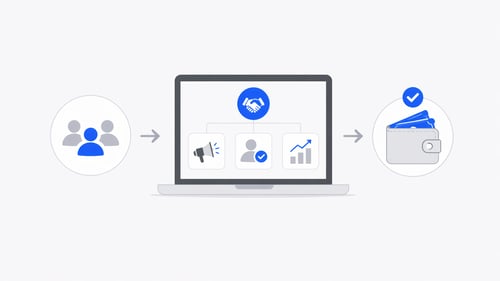
A referral partner is someone who introduces potential customers to a company's product or service, and earns a commission when those introductions convert into paying customers.
No sales quota. No cold calling. No product expertise required beyond enough to make a genuine recommendation. You connect a company you know with a product that would help them. If they sign up and use it, you earn a percentage of what they spend.
Referral partner vs. affiliate vs. reseller
These terms are used interchangeably, but they describe slightly different roles:
| Role | How you refer | Commission basis | Relationship type |
|---|---|---|---|
| Referral partner | Direct personal introductions | Per conversion | Trusted personal network |
| Affiliate | Content + tracking links | Link-driven signups | Audience-based |
| Reseller | Buys and resells directly | Margin on resale | Deep commercial relationship |
Most modern programs — including Giftronaut's — support both referral and affiliate models under one program. You can make personal introductions and share a public link, depending on what fits the situation.
How to Pick the Right Program to Join
The highest commission rate isn't always the best program. Evaluate these four things before you sign up:
Would you recommend this product even without the commission?
The most reliable referral income comes from products you already believe in. Your contacts trust your recommendations. If you're pushing a tool purely for commission, the referrals won't convert — and you'll damage the credibility you've built.
Does the product fit who you know?
Think about your professional network. What problems are the people around you trying to solve? Giftronaut serves companies that send gift cards to employees, clients, or prospects. If you work with HR teams, marketing agencies, or ops consultants — that's a natural fit with no convincing required.
Are the terms clear and fair?
Three things to look for in the program terms:
-
Attribution window: How long after your introduction does a signup still count as your referral? Shorter than 60 days is risky in B2B where decisions take time. Giftronaut offers 180 days from lead form submission.
-
Payout method: Cash, credits, or gift cards — and does the format work for you geographically?
-
Earning cap: Giftronaut places no cap per referred customer — you earn 5% on every qualified order they place in their first 12 months.
Is the program easy to operate?
A good program gives you an Affiliate Link, a way to submit leads directly, and a regular performance report. Programs that are vague about attribution or slow on payouts aren't worth your time regardless of the commission rate advertised.
How to Make Your First Referral
Once you've joined, most people stall at the same point: they have an Affiliate Link but aren't sure how to use it without it feeling like a sales pitch. The practical approach:
Start with people you know are a good fit
Think of one or two specific contacts who've mentioned a relevant problem. A referral works best as a natural extension of a real conversation — "You mentioned you're trying to send rewards to your team across five countries. There's a platform I've seen work really well for this — zero fees, completely digital, recipients choose their own gift."
Use the lead form for personal introductions
Most programs offer both an Affiliate Link and a direct lead form. For people you know personally, always use the lead form. When you submit a lead's business email, your claim is registered regardless of whether they later arrive via a different channel. Lead form submissions take priority over link attribution in nearly every well-run program.
This matters because in B2B, a prospect you introduce today might sign up three months later after a budget approval cycle. A lead form submission keeps your credit intact throughout that process. A link click may have long expired.
Use your Affiliate Link for passive promotion
If you write a newsletter, a blog, or post regularly on LinkedIn, add your Affiliate Link anywhere you mention the product. Lower-conversion than a personal introduction, but it runs without ongoing effort once it's in your content.
Include your FTC disclosure
If you recommend a product publicly and earn commission from signups, FTC guidelines require a disclosure. One sentence near the link is sufficient: "I'm a Giftronaut affiliate and may earn a commission if you sign up." Disclosure builds trust — most readers appreciate the transparency.
How Attribution and Payouts Work
Understanding attribution before you start prevents surprises later.
-
Attribution window: Giftronaut's 180-day lead attribution window runs from the date of your lead form submission — not from when a prospect clicks a link. This is important in B2B where decisions stretch across quarters.
-
Lead form beats link: If you've submitted a lead via the form and they later arrive via a different link or channel, your form submission retains priority.
-
First submission wins: If two partners submit the same lead, the first valid submission gets credit. If you know a prospect personally and plan to submit them, do it promptly.
Payouts are issued monthly via prepaid card or Choice Card options. Amounts below $25 roll to the following cycle. Choice Cards are redeemable across 30,000+ brands globally — you choose the brand at the time of redemption.
Frequently Asked Questions
Do I need a website or social media following to join?
No. Giftronaut's program is open to anyone with relevant professional connections. There is no minimum audience size, no traffic requirement, and no need to be an existing customer.
How much can I realistically earn?
It depends on how many companies you refer and how much they spend. Giftronaut pays 5% on every qualified order your referred customer places in their first 12 months, with no cap per customer. Refer one customer spending $2,000/month and earn $1,200 over their first year — from that one referral alone.
What if my referral doesn't convert within the attribution window?
The claim expires. If they sign up after the 180-day window, that signup won't be credited to you. There's no penalty — you simply won't earn commission on that particular customer. This is why the lead form matters: the 180-day clock starts at submission, giving you more runway than a typical link-click window.
Is there a cost to join?
No. Giftronaut's program has no setup fee, no subscription, and no requirement to be an existing customer. You join, get your Affiliate Link and lead form access, and start referring.
What's the difference between an Affiliate Link and a lead form submission?
An Affiliate Link is a trackable URL you share publicly. Attribution is stored at sign-up permanently — no expiry date. A lead form lets you proactively submit a prospect's business email, claiming attribution upfront. Lead form submissions take priority over link clicks — for people you know personally, always use the form.
Can I refer my own company or employer?
No. Self-referrals, referrals of family members, and referrals of companies you control or have a financial interest in are excluded. Attempting to do so typically results in removal from the program.

Wrapping Up
Becoming a referral partner is one of the lowest-effort ways to add income to work you're already doing. Pick products you believe in, use the lead form for personal introductions, and let the attribution window do the heavy lifting.
Not sure which program to start with? See our breakdown of the best B2B referral programs to join in 2026 — six programs compared on commission, attribution, and payout method.
If you work with companies that reward employees, clients, or prospects — Giftronaut Affiliate Program is open to join today. Free to join, no minimums, Affiliate Link attribution never expires.