
Gift cards for international employees can be country-specific cards, global prepaid cards, or Choice Cards. Match each reward to the employee’s country, currency, merchant rules, fees, and tax process before ordering.
What gift cards can I give employees in other countries?
Gift cards for international employees include local brand cards, Choice Cards, and global prepaid cards. A local card fits an employee who already shops with a specific merchant. For a country-specific card, use the issuer’s terms for the employee’s market.
Start by checking where the employee lives and spends, then compare the product’s currency, merchant rules, fees, and validity. Do not assume that a card issued for one country works in another; confirm the product’s current country conditions before ordering.
Which international gift card options fit a global team?
The right option depends on how much choice each employee needs and how much control HR wants over the reward. These seven categories separate country-specific products from broader reward options.
| Option | Eligible market and amount | Fees and expiry |
|---|---|---|
| Giftronaut Choice Card | Recipient selects the country, currency, and available brand | Read the gift card types guide and the selected card terms |
| Local brand card | Country and value set by the issuer | Check the issuer’s terms |
| Global Visa Reward Card | Eligible Visa merchants in 223 countries, USD $5 to $500 | 6% on purchases in a currency other than USD |
| Swype Global Virtual Mastercard | Listed in 202 countries, $5 to $999 | Review purchase and inactivity fees below |
| US Virtual Visa | Domestic purchases in the United States, USD | Confirm validity on the selected listing |
| Canada Virtual Visa | Domestic purchases in Canada, CAD | Confirm validity on the selected listing |
| Charity gift card | Use the country and amounts shown for the product | Confirm the terms of the specific card |
1. Giftronaut Choice Card
Giftronaut’s gift card types guide describes Choice Cards and the geographic conditions that apply. Giftronaut’s catalog includes 4,300+ brands across 225 countries, and brand availability varies by country.
2. Local brand gift cards
Local brand cards work well when HR knows the employee’s preferred merchant and country. Check the issuer’s country terms before buying a supermarket, retailer, restaurant, or entertainment card.
This route suits a small recognition program with known preferences. For a larger team, use a country and currency list before selecting brands, then check the live catalog rather than relying on a brand’s availability in another market.
3. Global Visa Reward Card
The Global Visa Reward Card is a USD product accepted at eligible Visa merchants in 223 countries. It supports values from $5 to $500, has no issuance, monthly, or dormancy fee, and carries a 6% fee on non-USD purchases.
Use remains subject to eligible-merchant rules and the 6% charge on non-USD purchases, so HR should disclose those conditions before sending it.
4. Swype Global Virtual Mastercard
Giftronaut lists the Swype Global Virtual Mastercard in 202 countries. Values range from $5 to $999, and the card is valid for up to three years from issue or 90 days after the last activity, whichever comes first.
The fee structure needs attention: purchases carry a $0.10 fee in the United States, and purchases outside the United States carry a $0.50 fee plus 1.5%. After two months without use, the card carries a $2.50 monthly fee. The activation link lasts 60 days.
5. US Virtual Visa
Use US Virtual Visa for domestic purchases in the United States. The Giftronaut Visa help article lists it as a USD card for US use.
6. Canada Virtual Visa
Use Canada Virtual Visa for domestic purchases in Canada. The Giftronaut Visa help article lists it as a CAD card for Canadian use.
7. Charity gift cards
The Giftronaut catalog includes CharityChoice and Charity On Top. Check the product listing before ordering.
Confirm the specific charity product and country availability before promising a particular redemption route.
How do I choose a card by employee country and currency?
Country and currency are the first filters for international employee rewards. Before you select a brand, check the country terms on its listing in the Giftronaut catalog.
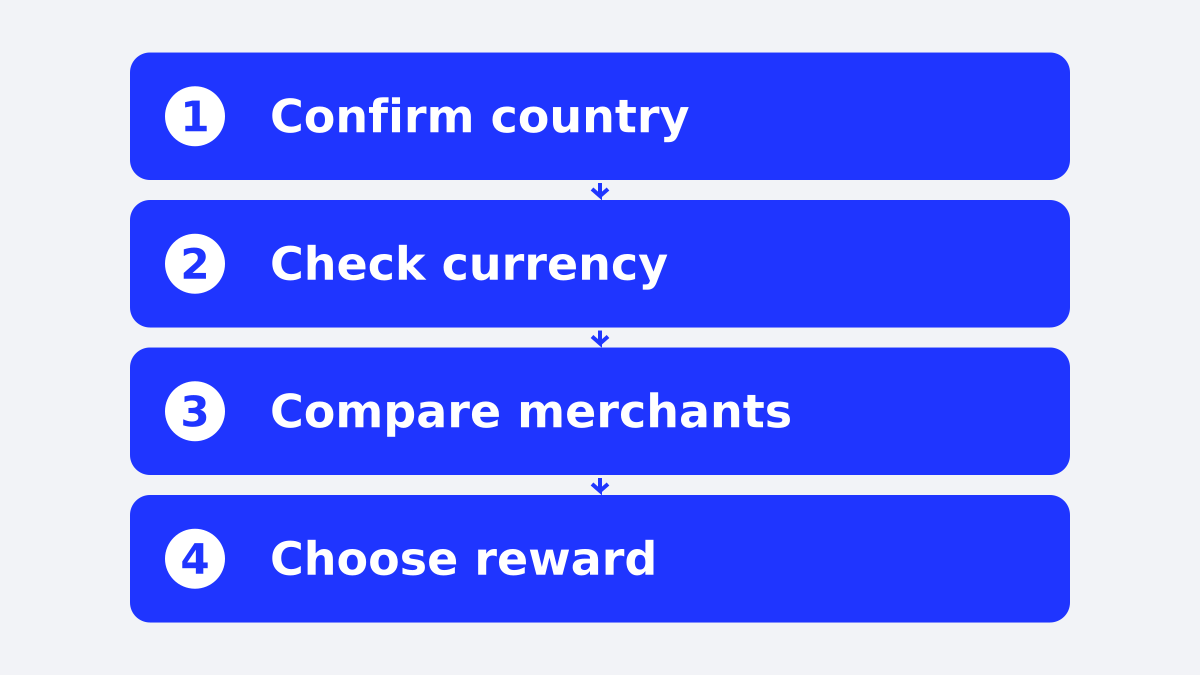
Use this four-step review before comparing brands:
- Confirm the country: record the employee’s current spending market, not only the company’s headquarters.
- Check the currency: confirm whether the product is issued or redeemed in the employee’s expected currency.
- Compare merchants: review the actual country catalog and the card’s eligible-use rules.
- Choose the reward: select a local brand, Choice Card, prepaid card, or global option.
For a 40-person team across the United States, Canada, and the United Kingdom, group the list by country. Check the terms for each proposed card before finalizing the order.
The international gift cards guide covers additional recipient-country considerations. It is useful when the question shifts from employee incentives to a broader international recipient comparison.
What costs should HR compare before sending rewards?
Compare the card’s recipient fees, funding costs, currency charges, and any inactivity terms. “No platform fees” does not mean every product has no product-specific charge.
Giftronaut does not charge platform, subscription, or per-card fees. Credit card funding carries a 3% processing fee, while ACH and wire funding are free.
Product-specific fees and funding costs should appear in the approval record. Review the exact product terms before sending, especially for international purchases.

What should HR know about tax and local rules?
For US employee rewards, review the federal fringe-benefit rules before approving the gift card.
For US employees, IRS Publication 15-B (2026) states that cash and cash equivalents such as gift cards are not excludable as de minimis fringe benefits, regardless of the amount. Ask payroll to review the reward before deciding how to report it.
Those are US federal sources, not a worldwide rule. Ask local payroll, tax, or employment advisers to review rewards for employees in other countries, and document the recipient type for every program.
How do I send international digital gift cards to employees?
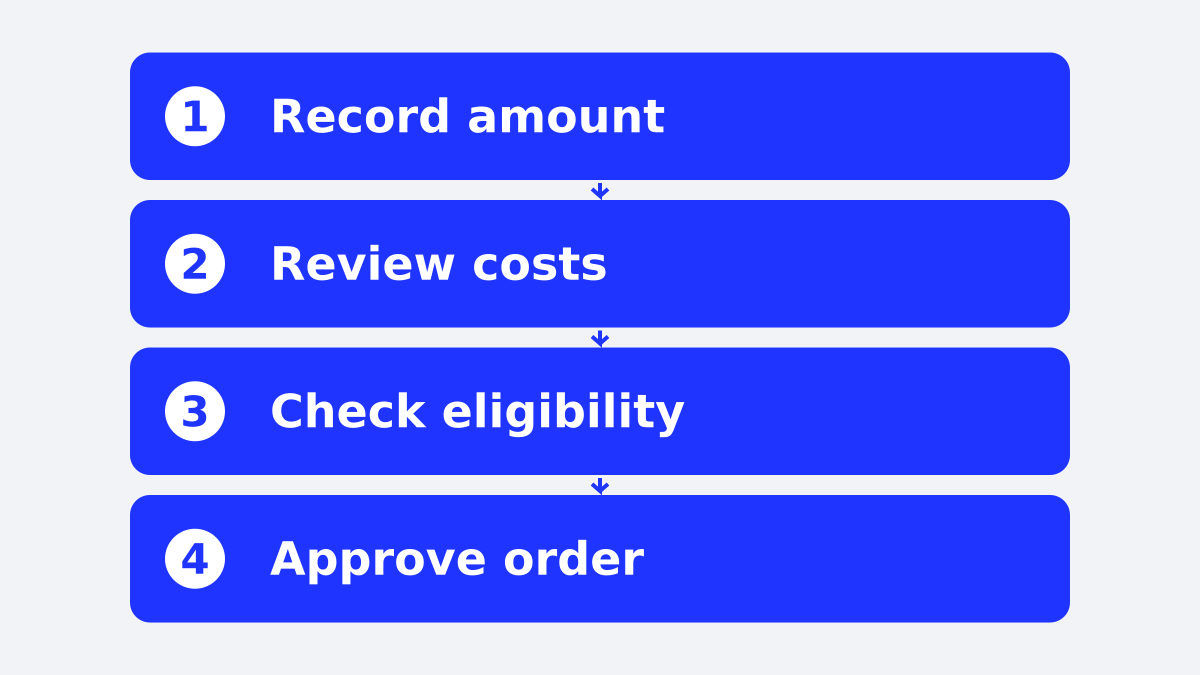
Prepare one list with country, reward value, and delivery method for each recipient.
- Build the recipient file: record the employee’s country, intended reward value, and the contact details needed for your selected delivery method.
- Review country rules: check the exact catalog or prepaid product for every country group.
- Choose the delivery method: Giftronaut supports email, text to US and Canadian (+1) mobile numbers only, or a reward link. Rewards can be delivered immediately or scheduled.
- Approve the order: check the roster, values, fees, and delivery timing before sending.
- Send instructions: include the issuer’s terms and the contact for employee questions.
For a larger order, Giftronaut’s bulk ordering workflow supports spreadsheet upload, scheduling, and one order to many recipients. The customer reviews and approves the order before sending it. Fulfilled orders cannot be canceled, exchanged, or refunded; scheduled orders can be canceled before they send.
How does Giftronaut fit an international employee reward program?
Giftronaut gives HR several ways to organize international rewards: Choice Cards, local brand cards, and prepaid products. Each product has its own country, currency, fee, and redemption conditions, so the program can be reviewed by country group instead of treating one reward as universal.
Before approving the order, check the card terms and funding method. Giftronaut’s credit card payments guide explains the card funding fee.
Choose the reward by recipient need
The right international employee gift card is the one that matches the employee’s country, currency, and preferred way to use the reward. Use local cards for known merchants, Choice Cards for varied preferences, and prepaid options when flexibility matters more than one retailer.
Save the issuer terms with each country group and share the relevant terms with employees.

Frequently Asked Questions
What gift cards can work internationally?
International employee rewards can use global prepaid cards, Choice Cards, or country-specific cards matched to the recipient. The exact country, merchant, currency, and fee rules determine whether a product fits the employee.
Can I buy a gift card for someone in another country?
Yes, if the product supports the recipient’s country and the sender follows its delivery rules. Confirm the recipient’s location before selecting a retailer or prepaid card.
Are prepaid gift cards suitable for international employees?
Prepaid gift cards suit international employees when the product’s country, currency, merchant acceptance, and fees match the recipient. Global Visa and Swype have different coverage and fee rules.
Should I give employees a local gift card or a Choice Card?
Give a local gift card when the employee has a known merchant preference. Use a Choice Card when employees live in different markets or need to select their own reward.
Are gift cards taxable for employees?
For US employees, IRS Publication 15-B treats gift cards as cash equivalents that are not excludable as de minimis benefits. Taxable fringe benefits generally go on Form W-2 and are subject to employment taxes.
Can HR send one gift card type to employees in every country?
Check the product terms for each country group. Review country availability, currency, merchant rules, fees, and local tax requirements before using one option across a global team.
Does Giftronaut support bulk international employee rewards?
Yes, Giftronaut supports spreadsheet upload, scheduling, and one order to many recipients. Delivery options include email, text to US and Canadian (+1) mobile numbers only, or reward links.