
A Christmas gift message for clients works best when it names the relationship, thanks the client for something specific, and keeps the sales pitch out. For a card, use three to five sentences. For email or SMS, one or two lines is usually enough.
I’d read each line as if it had just appeared on my phone. If the gift cue gets lost after the greeting, shorten it.
What should you write in a professional holiday card to clients?
A professional holiday card to clients should thank them for the relationship, acknowledge the season, and close with a good wish for the year ahead. Keep the wording specific enough to feel personal, but general enough to suit a business relationship.
Use this structure:
- Greeting: address the client by name when possible.
- Specific thanks: mention the partnership, project, trust, or support.
- Gift cue: explain that a small gift is included.
- Closing wish: wish them a peaceful holiday season or a strong new year.
- Sign-off: use the sender’s name and company.
Avoid adding a product announcement, renewal request, meeting link, or promotional code. A client gift is a relationship moment. Turning it into a sales email changes the tone.
Hi [First Name],
Thank you for your partnership this year. We’ve appreciated the chance to work with you and your team. Please accept this small gift as our thanks. Wishing you a peaceful holiday season and a wonderful New Year.
Best, [Sender Name]
How do you structure the short note with a digital gift?
A business holiday message should move from recognition to appreciation to a warm sign-off. The message does not need to explain the whole client relationship, especially when the gift note is limited to a few lines.
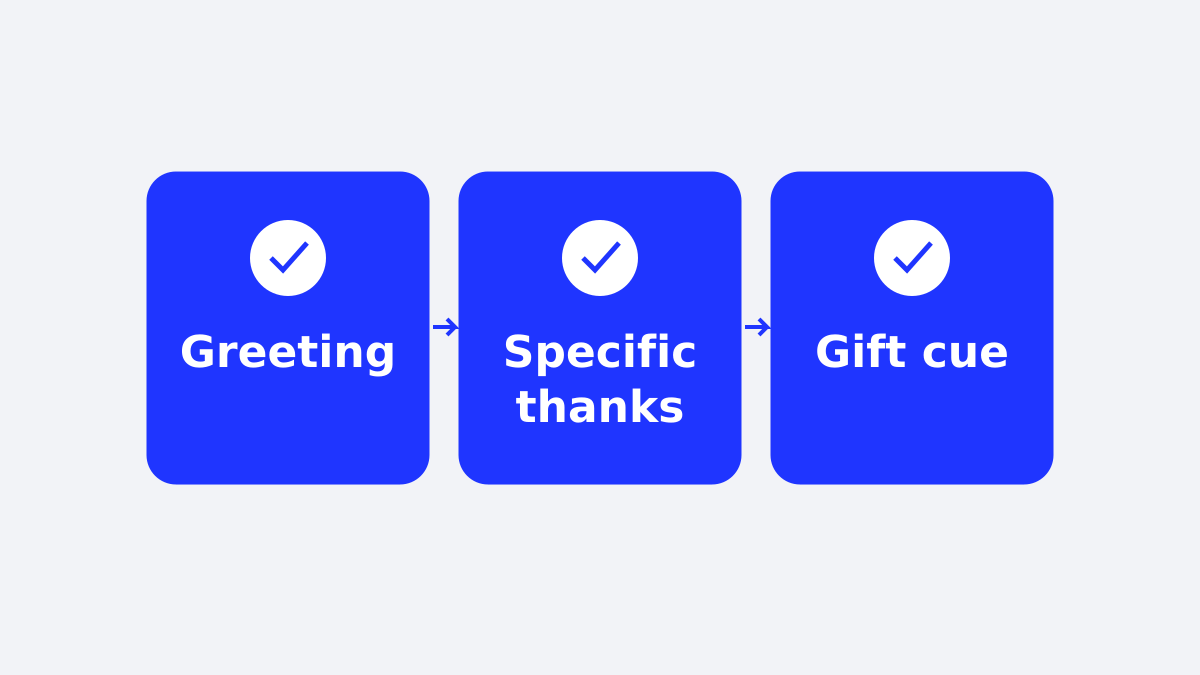
For the one or two lines that accompany a digital gift, keep three essentials: a greeting, specific thanks, and a clear gift cue. Put your seasonal wish and signature in the surrounding email or card when you have more space.
The middle sentence is where the message becomes more than a generic greeting. Replace “Thank you for your business” with the reason you value the relationship:
- “Thank you for trusting us with such an important project.”
- “We’ve appreciated your thoughtful collaboration throughout the year.”
- “Your team’s quick feedback helped keep the work moving.”
- “Thank you for another year of partnership and shared progress.”
The diagram shows the three essentials for a short digital note: a greeting, specific thanks, and a gift cue.
What should you write in a Christmas message to clients by tone?
The right tone follows the relationship and the client’s communication style. Formal wording suits a new or highly regulated relationship, while warm wording fits a long-standing partnership with an established rhythm.
Formal Christmas message examples
Use formal language when the relationship is new, senior, international, or more traditional.
- “Season’s greetings, [Name]. Thank you for the opportunity to work with you this year. Please accept our sincere thanks and best wishes for a peaceful holiday season and a successful New Year.”
- “Thank you for your trust and partnership throughout the year. We wish you and your colleagues a restful holiday season and continued success in the year ahead.”
- “With appreciation for your partnership, we wish you a happy holiday season and a prosperous New Year.”
- “Please accept our thanks for your collaboration this year. We look forward to continuing our work together in the New Year.”
Warm Christmas message examples
Warm messages can sound more personal without becoming casual or overly familiar.
- “We’re grateful for the chance to work with you this year, [Name]. Thanks for making the partnership such a pleasure. Wishing you a joyful holiday season.”
- “Thank you for another great year of working together. We hope this small gift brings a little extra enjoyment to your holiday.”
- “Your partnership has meant a lot to our team this year. Wishing you a relaxing Christmas and a bright start to the New Year.”
- “Thanks for the trust, ideas, and good conversations this year. We hope you enjoy a well-earned holiday break.”
Inclusive holiday message examples
Inclusive wording keeps the message welcoming when the recipient’s traditions are unknown or the audience spans regions and backgrounds.
- “Season’s greetings, [Name]. Thank you for your partnership this year. Wishing you a restful holiday season and a happy New Year.”
- “With appreciation for working together this year, we’re sending warm wishes for the holiday season.”
- “Thank you for being a valued partner. We hope you enjoy a peaceful holiday season and a wonderful year ahead.”
- “Warm holiday wishes from our team to yours, with sincere thanks for your partnership.”
“Happy holidays” and “season’s greetings” are useful when a company is writing to a broad client list. “Merry Christmas” fits when the sender knows that wording suits the recipient and the relationship.
What should you write to a new client?
A message to a new client should express appreciation without pretending the relationship is older or closer than it is. Thank the client for the opportunity, trust, or welcome they gave your team.
Examples:
- “Thank you for choosing to work with us this year, [Name]. We’re grateful for the opportunity and look forward to what we’ll accomplish together. Wishing you a wonderful holiday season.”
- “It has been a pleasure getting to know you and your team. Thank you for a strong start to our partnership, and warm wishes for the New Year.”
- “We appreciate the opportunity to support your team. Please accept this small gift with our thanks and best wishes for the holidays.”
Avoid phrases such as “another successful year together” when the relationship only began recently. Accurate warmth feels better than exaggerated familiarity.
What should you write to a long-term client?
A long-term client message can acknowledge continuity, shared work, and trust. Mention the length of the relationship only when it sounds natural and accurate.
Examples:
- “Thank you for another year of partnership, [Name]. We’re grateful for the trust you’ve placed in our team and look forward to continuing the work together.”
- “Your continued partnership has helped make this a meaningful year for our team. Please accept our thanks, and enjoy a peaceful holiday season.”
- “We’re thankful for the ideas, candor, and collaboration you’ve brought to our work together. Wishing you and your team a happy holiday season.”
- “Thank you for being such a valued client over the years. We hope this small gift helps you enjoy a well-deserved break.”
A long-term client does not need a longer message. Familiarity gives you permission to be more personal, not a reason to write a paragraph about every project.

What should you write after a difficult year?
A message after a difficult year should stay respectful and avoid forcing optimism. Acknowledge the partnership and offer a straightforward wish for rest, stability, or a better year ahead.
Examples:
- “Thank you for working through a demanding year with us, [Name]. We appreciate your partnership and wish you and your team a peaceful holiday season.”
- “We’re grateful for your trust and collaboration throughout the year. Wishing you time to recharge and a brighter New Year.”
- “Thank you for staying alongside us through a challenging year. Please accept this small gesture of appreciation, with our warmest wishes for the holidays.”
- “Your partnership has meant a great deal this year. We hope the holiday season gives you and your team a chance to rest and look ahead.”
Do not mention layoffs, financial pressure, a failed project, or another sensitive event unless the recipient has already raised it and the sender can respond appropriately. A restrained message is kinder than an upbeat slogan that ignores the situation.
What should you write in a client gift card note?
A gift card note should identify the sender, thank the client, and explain the gesture in one or two sentences. The recipient should understand the purpose without opening a second message.
Short examples:
- “Thank you for your partnership this year, [Name]. Please enjoy this small gift from [Company]. Happy holidays!”
- “With sincere thanks for your collaboration, we’re sending warm holiday wishes from the [Company] team.”
- “Thank you for a wonderful year of working together. We hope you enjoy this gift and a restful holiday season.”
- “A small thank-you for your trust and partnership. Wishing you a happy holiday season, [Name].”
- “Warm wishes from our team to yours, and thank you for being a valued client.”
When the recipient has a choice, use a neutral cue such as “Choose something you’ll enjoy.” Name a specific merchant only if it is the actual gift.
What should you write in an email with a client gift?
An email with a client gift needs a clear subject line, a short message, and a direct explanation of where the gift is. The email can carry slightly more context than an SMS, but the note still works best when it stays brief.
Subject: A holiday thank-you from [Company]
Hi [First Name],
Thank you for your partnership and collaboration this year. We’re sending a small holiday gift as a sign of our appreciation. You can access it here: [Gift Link]
Wishing you a peaceful holiday season, [Sender Name]
Other subject lines:
- “A small thank-you for your partnership”
- “Warm holiday wishes from [Company]”
- “Your holiday gift from [Company]”
Avoid placing the gift link behind vague text such as “Click here” when the email is likely to be forwarded. Use “Open your holiday gift” or a similar clear label, and confirm that the recipient’s name and address are correct before sending.
What should you write in an SMS with a client gift?
An SMS gift message should fit on one or two lines and identify the sender before the link. Keep the greeting, thanks, and action clear.
Examples:
- “Hi [Name], thank you for your partnership this year. [Company] has a holiday gift for you: [Link]”
- “Warm holiday wishes from [Company], with thanks for working with us this year. Your gift: [Link]”
- “A small thank-you for your partnership, [Name]. Wishing you a happy holiday season: [Link]”
- “Thank you for another year together. Please enjoy this gift from [Company]: [Link]”
Only send a text when the recipient has an appropriate business relationship with the sender and the delivery route is approved. A surprise message from an unknown number can feel like spam, even when the gift is genuine.
How can you keep a client Christmas message from sounding like a sales pitch?
Keep the message focused on appreciation, and remove any sentence that asks for business. The gift should not arrive with a renewal request, product announcement, meeting invitation, or performance claim.
Before sending, check the message against this list:
- Does it name the recipient or client team?
- Does it include one specific reason for the thanks?
- Does it make the gift clear without exaggerating it?
- Does the seasonal wording fit the recipient and region?
- Does the sign-off identify the sender?
- Does it avoid a sales request?
- Does the link go to the intended private gift?
For a larger client list, choose the gifts using the client gift ideas guide, then create a few approved versions rather than sending one identical sentence to everyone. Use a formal version for newer relationships, a warm version for established clients, and inclusive wording when the recipient’s preference is unknown.
For a client list, use Giftronaut’s one-time order guide to prepare and review an order for multiple recipients. If your account has reward-link downloads enabled, the download guide explains how to obtain each link. Pair each approved line with its intended recipient and use your private delivery channel.
How do you prepare the gift and message in Giftronaut?
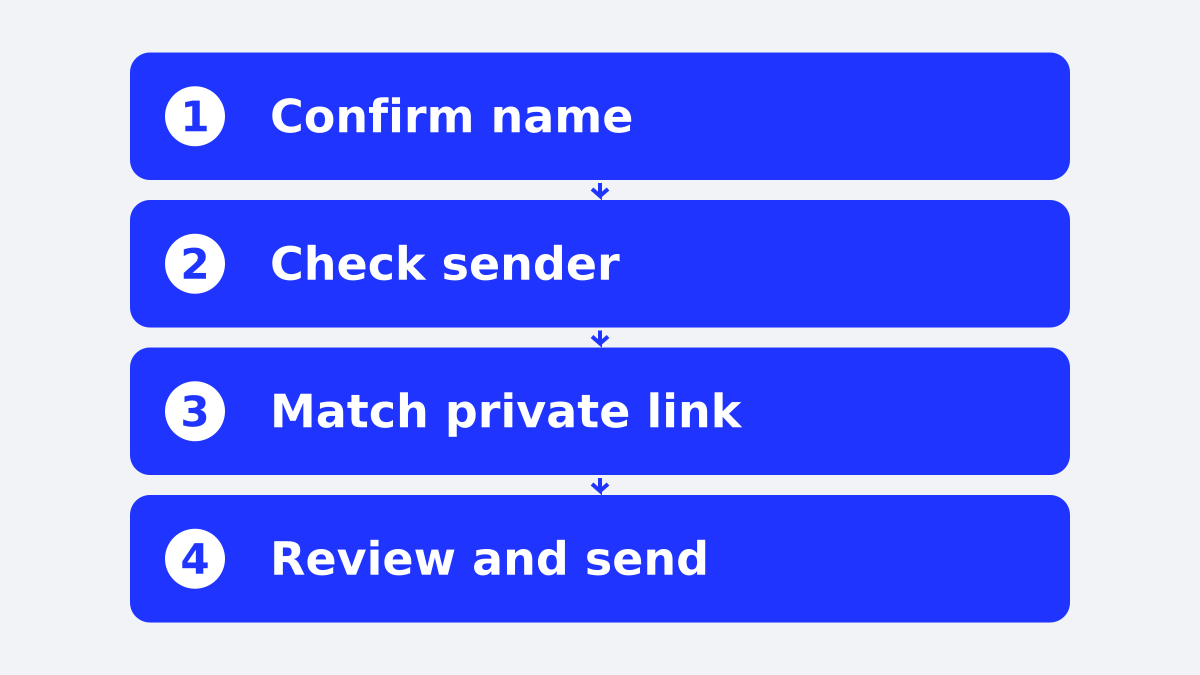
Review the actual recipient, gift and delivery details before confirming the order. Keep one private message with each approved gift.
- Confirm the name: use the client’s preferred name and spelling.
- Check the sender: make the individual or company clear in the message.
- Match the private link: connect each recipient with the correct gift link.
- Review and send: check the timing, wording, link, and signature in one final pass.
For reward links, the reward-link download guide explains the sender’s handoff process.
A simple way to finish your client messages
I’d start with one client, one relationship detail, and one clear gift cue. Use that line as a template and keep the thanks specific to each client.

Frequently Asked Questions
What is a good Christmas message to send to clients?
A good message thanks the client for the relationship, mentions the gift, and offers a warm seasonal wish. Keep it specific, professional, and free of a sales request.
What are some good Christmas greetings for business customers?
“Thank you for your partnership this year. Wishing you and your team a peaceful Christmas and a wonderful New Year” is a dependable option. Use “holiday season” or “season’s greetings” when inclusive wording fits better.
What do you write in a Christmas card to a business customer?
Write a greeting, one specific sentence of thanks, a short gift cue, and a seasonal sign-off. A card can carry three to five sentences without feeling crowded.
What is a good holiday message to clients?
A good holiday message to clients is warm, direct, and focused on appreciation. For example: “Thank you for your trust and collaboration this year. We’re sending warm wishes for a restful holiday season.”
How short should a client gift message be?
A card message can use three to five sentences, while an email or SMS gift note usually needs one or two lines. Keep the sender, thanks, and gift link clear in every format.
Should a business message say “Merry Christmas” or “Happy Holidays”?
Use “Merry Christmas” when you know it suits the recipient and relationship. Use “Happy Holidays” or “Season’s Greetings” when the audience includes different traditions or preferences.