
Christmas greeting cards for employees should thank staff for a specific contribution and close with a warm holiday wish. For example: “Thank you for keeping the customer launch moving during a demanding quarter. We’re grateful for your work and wish you a peaceful holiday season.” A printed card can accompany a physical gift card. If the reward is digital, send it individually by email or eligible text and tell the employee where to expect it.
I’d start with the detail only this team would recognize. Put that detail in the card before you think about the signature.
What should go in a Christmas greeting card for employees?
A Christmas greeting card for employees should thank people for a specific contribution, recognize the team’s work, and offer a sincere holiday wish. Keep the message warm and inclusive, without making employees guess whether the note is meant for them.
A useful card message has four parts:
- Greeting: use the employee’s name when the card is individual, or the team name when one card serves a group.
- Appreciation: mention the work, care, flexibility, or collaboration that helped the team.
- Shared moment: refer to the year, a project, or the effort required to support customers and colleagues.
- Holiday wish: close with a Christmas greeting or an inclusive holiday message.
The best wording does not need to sound grand. “Thank you for keeping the customer launch moving during a demanding quarter” gives the employee something real to recognize. “Thanks for everything this year” is pleasant, but it could belong to anyone.
Company-to-staff Christmas card wording
Use a company message when the card goes to every employee or carries the leadership team’s signature.
Thank you for the care, creativity, and teamwork you brought to the year. Your work helped our customers and supported the people around you. We’re grateful to have you on the team and wish you a Merry Christmas and a restful holiday season.
For an inclusive version, replace the final sentence with:
We’re grateful to have you on the team and wish you a peaceful holiday season and a strong start to the new year.
Manager-to-team Christmas card wording
A manager’s message can be more specific because it comes from someone who saw the team’s work directly.
Thank you for the way you supported one another through a busy year. I noticed the extra care you brought to the project, the customers, and the everyday details that keep our team moving. I hope you have a wonderful Christmas and time to recharge with the people who matter to you.
An inclusive alternative is:
Thank you for the patience, humor, and teamwork you brought to a busy year. I appreciate what each of you contributed, and I hope your holiday season gives you time to rest and enjoy the people and traditions you value.
What should you avoid in an employee Christmas card?
Avoid jokes about performance, attendance, pay, family status, or personal beliefs. A company card is not the place to rank employees, announce targets, or turn appreciation into another work instruction.
Skip generic praise when you have room for one concrete detail. Also check the message for accidental assumptions, such as treating Christmas as the only holiday an employee observes or implying that everyone takes the same time off.
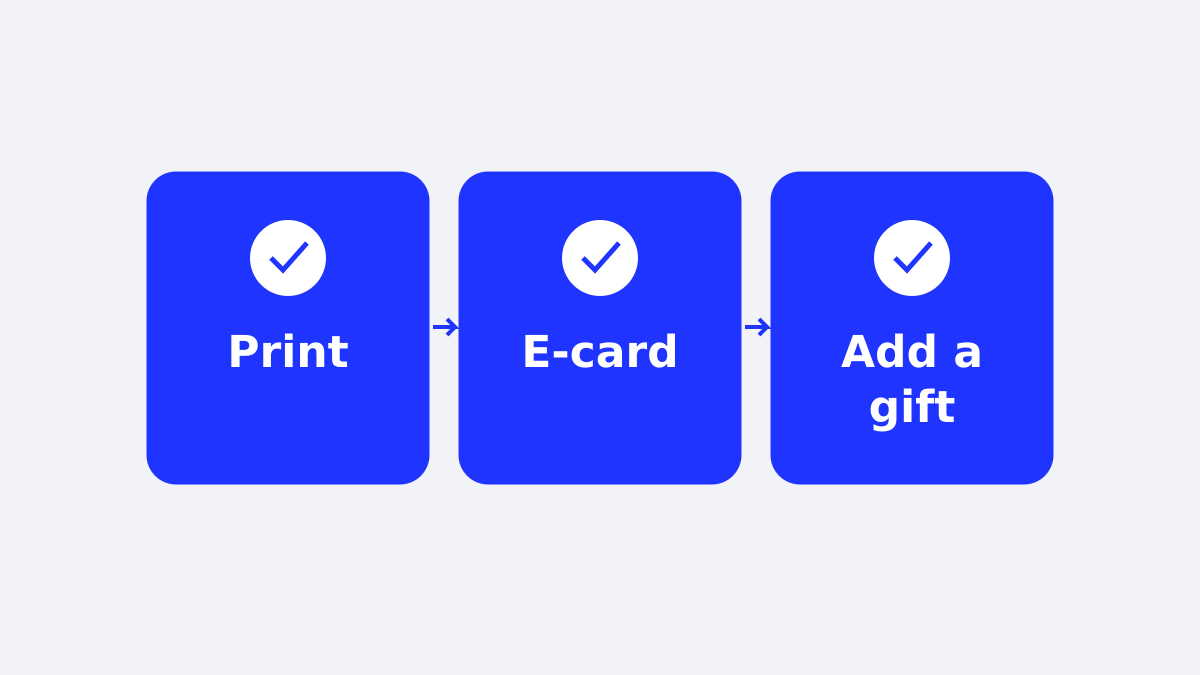
Printed cards or e-cards: which format fits your team?
Printed cards create a physical gesture, while e-cards reduce handling and reach remote employees quickly. The right choice comes down to recipient location, mailing lead time, personalization, and whether a digital gift card will accompany the greeting.
| Option | Works well when | Watch first |
|---|---|---|
| Printed card | Employees work together or value a physical keepsake | Addresses, postage, printing time, and late changes |
| E-card | Employees work remotely or the team is spread across locations | Email deliverability, inbox clutter, and personalization |
| Digital greeting with gift card | You want to send a digital greeting and an individual gift | Correct contact details, delivery timing, and recipient privacy |
Printed Christmas cards for employees
Printed cards suit an office, warehouse, or team gathering where someone can hand the card to each employee. They also give managers space to add a handwritten line, which can make a standard company message feel less mechanical.
The trade-off is timing. You need final wording, employee names, mailing addresses, card quantities, envelopes, postage, and a plan for remote staff before the order goes to print. A typo found after printing is less charming than it sounds.
Use a printed card when:
- Most employees work at a shared location.
- The card is part of an in-person celebration.
- A physical keepsake fits the company’s culture.
- You have enough time to verify addresses and mail delivery.
E-cards for employees
E-cards fit distributed teams because the message reaches an employee’s digital inbox instead of waiting for a physical envelope. They also make it easier to send the same greeting to remote employees, contractors, or teams working across several locations.
An e-card still needs a review step. Confirm each address, check the sender name, preview the message on a phone, and decide whether employees should receive individual messages or one team greeting. Schedule delivery only after the final recipient list is complete.
How much mailing time do printed cards need?
Set the mailing date from your own printer and carrier estimates. For example, suppose you want cards on Friday, December 18, and your carrier estimates four working days. Allow two more working days for a delay and hand the cards to the carrier on Thursday, December 10. If addressing and printing take two working days, approve the proof by Tuesday, December 8. Those dates are planning examples, not carrier guarantees.
Compare the full cost rather than the card price. If your own quotes for 50 recipients are $100 for printing, $45 for postage and $60 for e-cards, printed delivery would cost $145 before staff time and e-cards would cost $60. Keep the same gift value in both estimates, and add it after comparing the greeting formats.

Who should receive a business holiday card?
A business holiday card should go to the employees, teams, or business contacts included in the purpose of the message. For an employee appreciation send, that usually means every employee covered by the company’s recognition plan, including remote staff and employees who do not work at headquarters.
Start with the purpose rather than the mailing list. Ask whether the card recognizes employees, thanks clients, marks a partnership, or supports a broader holiday campaign. Each audience needs different wording and a different review owner.
For employee cards, check:
- Full-time and part-time employees included in the program.
- Remote, field, warehouse, and shift-based employees.
- Employees on different office or regional mailing lists.
- New hires who joined before the recognition cutoff.
- Employees whose preferred contact method is email rather than a work address.
Privacy matters when a digital gift card accompanies the greeting. Send each employee their own message or reward link rather than placing private delivery details in a group email. A shared celebration message can be public; a reward should remain addressed to its recipient.

Can a gift card go with an employee Christmas card?
Yes, a gift card can accompany an employee Christmas greeting as a physical add-on or through a separate digital delivery. For employee recipients, cash and cash equivalents such as gift cards are not excludable as de minimis fringe benefits under IRS Publication 15-B (2026), so coordinate the tax treatment with payroll before sending. Keep the greeting card focused on appreciation, while the separate gift delivery carries its own recipient instructions.
There are three practical routes:
- Printed card plus physical gift card: place both in the same envelope only when the gift card’s issuer and handling process support that route.
- Printed card plus digital gift card: hand over the printed greeting and send the reward separately by email or text.
- Digital greeting plus digital gift card: deliver the message and reward through a digital channel, which suits remote employees and short holiday timelines.
Keep the greeting and the gift note separate in your process. The card can say “A small thank-you is on its way,” while the separate gift delivery carries its own instructions. For help choosing the gift itself, the Christmas gift card guide for employees covers the gift choice.
How to send a digital greeting with a gift card
A digital greeting with a gift card works when employees are remote, the holiday deadline is close, or the team is spread across countries. Giftronaut’s one-time order guide describes email, text and reward link options and how to choose a send date. Text delivery is limited to US and Canadian (+1) mobile numbers.
For a business sending to many employees, the workflow is simple:
- Confirm the recipient list: check names, email addresses, phone numbers, and locations.
- Choose the greeting route: use email for a message that needs more space, SMS for eligible US or Canadian mobile numbers, or a reward link shared through your own channel.
- Write and preview the message: keep the appreciation note separate from gift instructions.
- Schedule or send: choose a delivery time that gives employees room to read the message before the company break.
- Save the record: Giftronaut’s order history guide explains how to export order and delivery details for reconciliation.
Check the delivery choices in the Giftronaut order guide if the gift will arrive separately. Use the greeting to thank the employee, and tell them where the reward will arrive.
Price the greeting and the reward separately before approving the order.
A simple Christmas card review checklist
Use one owner for the message and another person for the recipient and delivery check. That separation catches errors that a polished paragraph will not.
- Audience: Does the card go to every employee covered by the plan?
- Tone: Is the message warm, specific, and inclusive?
- Names: Are names spelled correctly and matched to the right address?
- Format: Does each employee receive a printed card, e-card, or digital route that fits their situation?
- Gift: Is the gift card sent separately when it contains private redemption details?
- Timing: Does the schedule allow for proofing, delivery, and a correction?
- Signature: Is the sender clear, such as the company, department, or manager?
A final phone preview matters for e-cards and digital gift messages. Employees often read them between meetings, on a mobile device, or from a personal inbox during a busy week.
Make the greeting feel personal at scale
A card sent to every employee does not need a different paragraph for every person. It needs a clear shared message, correct delivery, and one detail that shows the sender understands the team’s work.
Choose printed cards for a physical workplace gesture. Choose e-cards when speed and remote access matter. Add a digital gift card when you want the appreciation and reward to reach employees in separate messages.
I’d read the note aloud once before signing. A line that sounds natural in your voice is easier to make your own.

Frequently Asked Questions
How do I word thank-you cards to employees at Christmas?
Name the contribution you want to recognize, explain why it mattered, and thank the employee directly. A manager can use a more specific example, while a company-wide card can recognize teamwork across the year.
Should a company holiday card say Merry Christmas or Happy Holidays?
Use the greeting that fits your audience and company context. “Merry Christmas” is appropriate when the sender knows it fits the recipient, while “Happy Holidays” or “peaceful holiday season” gives a broader group an inclusive option.
How do you include off-site staff in a company card send?
Every employee included in the purpose of the appreciation program should receive the card, including remote, field, warehouse, and shift-based employees. Confirm the list against the program’s eligibility rules before sending.
Are e-cards appropriate for remote employees?
E-cards are appropriate for remote employees when the sender confirms contact details and reviews the message on a mobile device. They avoid physical mailing while keeping remote staff included in the same recognition moment.
Should a reward link go in a group holiday email?
Keep the group email for the greeting. Send individual reward links separately to the intended recipients.
Can Giftronaut deliver a digital gift with the greeting?
Giftronaut’s delivery instructions cover email, text and reward links. Tell each employee where the gift will arrive. Text delivery is available for US and Canadian (+1) mobile numbers, while reward links can be shared through the sender’s own channel.