How can I get more clients? It’s a question we’d all love a clear answer to. You’ve updated your website, posted about your services, and checked your inbox more times than you’d like to admit.
Still, finding your next client feels like a guess, and everyone you ask seems to have different advice.
So where do you actually start? Pick one action that fits where your business is today. Start with one clear offer and a few people you can reach, then see how they respond. That gives you something to work with when deciding your next move.
Choose your starting point
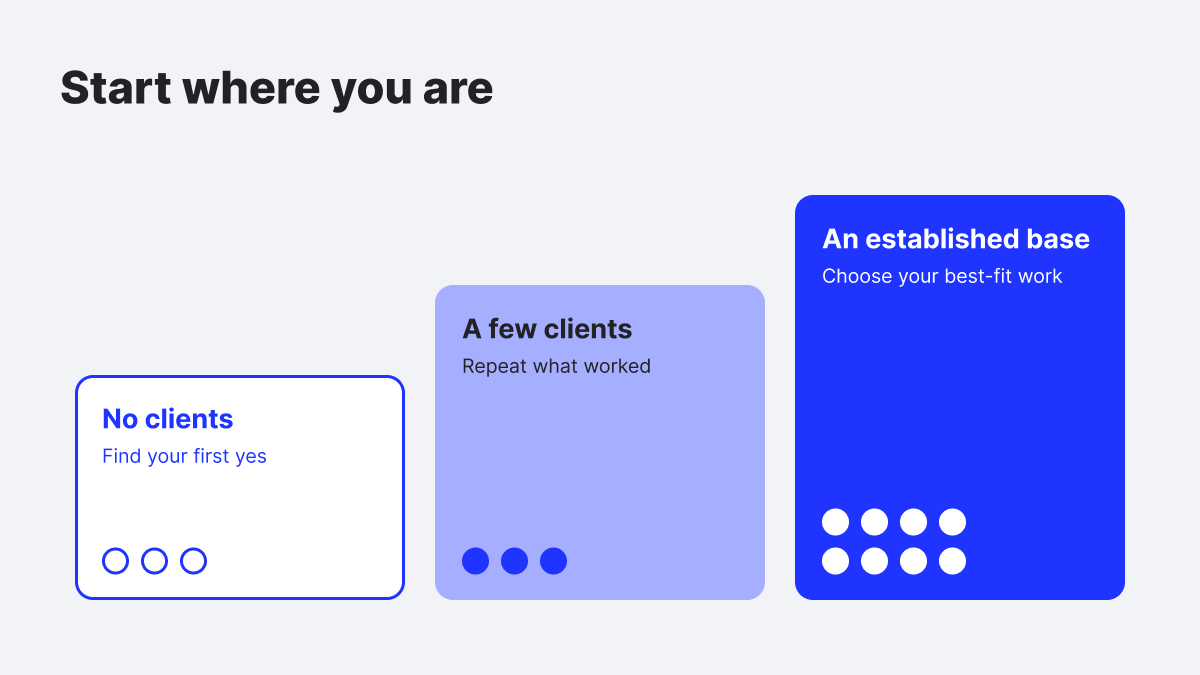
Start with the one that sounds most like you:
- You have no clients: You need to find people who might buy and give them a reason to trust you.
- You have a few clients: You need to work out what brought them in and do more of it.
- You have an established client base: You need a way to bring in good-fit work without neglecting the clients you already have.
It doesn't matter whether you’re a freelancer, a business owner, or a salesperson trying to get customers or clients on your own.
Go by what’s holding you back, not by how long you’ve been in business. If you're entering a new market, you may still need to start by building trust from zero.
Asking happy clients for introductions works once you’ve finished a few good projects. If you’re starting from zero, begin with people who already know your work or the problem you solve.
How do you get your first clients?
Writing that first message is hard when you don’t know what to say. Start by giving someone a clear reason to keep talking to you.
Describe one problem you can solve
Here’s an offer a website designer could write:
“I build booking pages for independent fitness instructors who currently arrange every appointment through messages.”
It names who they help, what’s going wrong for them, and what they’ll do about it.
Keep yours small enough to explain in a short chat: what’s included and what happens next.
If you sell several services, test one offer first. You can add more once you know which problems people will pay you to solve.
Start with people you can reach
Make a short list of people you could message today: possible clients, former colleagues, professional contacts and businesses that serve a similar audience.
Pick each person for a reason you can say out loud:
- You know their work and can spot a problem you could help with.
- They’ve asked for help with something you do.
- They serve a similar audience and could introduce you to people.
The U.S. Small Business Administration recommends networks, referrals, and complementary business partnerships among its approaches to finding first customers.
Tell each person why you’re reaching out. A former colleague needs a different message than someone who’s never heard of you.
If they already know you, try something like this:
“Hi Sam, I’ve started building booking pages for independent fitness instructors. If you know someone who’s handling appointments through messages, I’d appreciate an introduction. I can send a sample so they can see the kind of work I do.”
Try this today: List five people you can message personally, then write a different opening line for each.
Build one small thing that proves you understand them
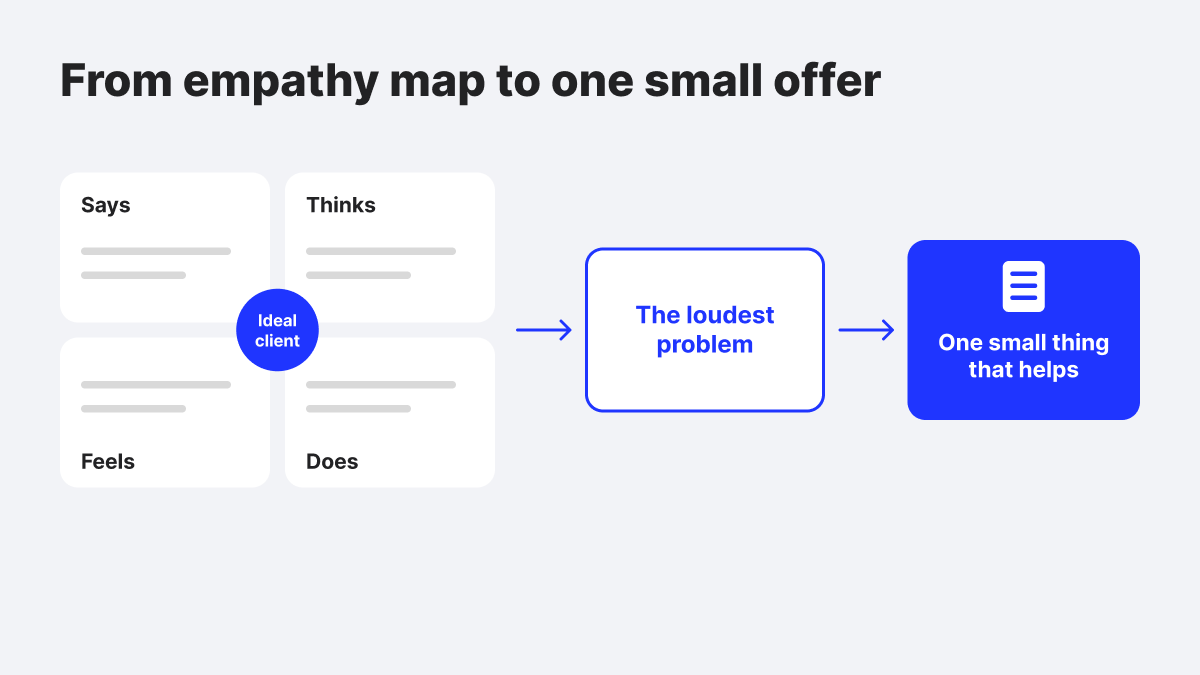
When I wanted more leads, I started with an empathy map. I focused on HR supervisors and one problem: reporting on their own gifting program to management. So I made a reward report template to help with exactly that.
I shared the template through our blog, homepage, and resource hub, and promoted it with paid Meta ads. More than 20 people downloaded it in the first week, and I’m now following up with two active leads, with the goal of converting them.
You can draft a small version of this in an afternoon. Getting it in front of the right people takes longer.
- Pick one ideal client, not three.
- Fill in the four boxes: says, thinks, feels, does.
- Circle the one problem they’d pay to make go away.
- Draft the smallest thing that helps with that problem. It doesn’t have to be a template: a portfolio sample, a short checklist or a walkthrough of how you work can do the job.
- Decide where it will live and who will see it first, such as the people on your list above or a community you already belong to.
- Offer it in exchange for a conversation, not just an email address.
You don’t need ads or a landing page to start. A rough sample you show to a few people you already know beats a polished one nobody sees.
How do you get more clients when you already have a few?
Your current clients can tell you where to spend your time next.
Look at how your recent clients found you
Say a client saw several of your social posts but only reached out after a colleague recommended you. Which one is how they found you? Write down both.
Do this for each recent client: where they came from, what they bought, and why they chose you. If you don’t know, ask. Their answer will tell you more than guessing from the last link they clicked.
Look for the pattern before you add another channel. If introductions keep bringing good-fit work, make asking for them part of wrapping up every project.
Make referrals easy to explain
Ask for an introduction once a client has seen results and told you they’re happy.
Give them something specific they can pass along:
“I’m glad the new booking page is working well for you. If another instructor you know is handling appointments manually, I’d appreciate an introduction. I can send a short example for you to forward.”
You can also try a referral reward if it fits your budget and your client relationships.
One option is a digital gift card once a referred client finishes their first paid project. Say exactly what qualifies and when they’ll get it, and check that the recipient can accept it. If you’re not sure how much to give, see how to set a good referral bonus amount.
Giftronaut supports digital rewards for referral programs, which is one easy way to handle that thank-you. Even without a reward, make the request easy to say yes to.
Protect the time you need to deliver
If your plate is already full, check your capacity before you send more outreach. Focus on projects that fit your skills, your schedule and your goals. Look at which accounts need attention and which work you want more of, then decide which inquiries to turn down.
If you can take on one new project next month, tell your referral partners what it looks like. They’ll know what to send you, and you’ll spend less time on work you can’t take.
What should you stop doing when you’re trying to get clients?
For each thing on your to-do list, ask: does it help the right person understand your offer, contact you or decide?
Stop polishing a website that nobody has seen
You need a clear way to explain your offer and get inquiries. Once you have that, set a deadline for design tweaks.
Changing your homepage colors again won’t tell you why prospects aren’t replying, especially if you haven’t contacted anyone yet.
Send people to the page and write down their questions. Let those decide what to fix next.
Stop sending the same pitch to everyone
Pick a smaller group you understand well enough to write to specifically.
If your offer could describe almost any business, rewrite it before you send another message. Name the specific problem you noticed, and don’t pretend to know their internal numbers.
Change one thing at a time: the audience, the offer or the next step. That way you know what made the difference.
Stop measuring effort without measuring responses
Track what happens after you reach out: replies, conversations, proposals and paid work.
A made-up example, not a real result: Say you send 20 messages, get four replies and have two calls, but win no projects.
That doesn’t mean the channel is useless. Go back over the conversations. You may have reached interested people whose needs, budget or timing didn’t fit.
Let your next test respond to what you learned. Another 100 identical messages won’t show you what to fix.
How do you keep clients coming back?
Once you win a client, make it clear what working with you looks like.
Set expectations and close the loop
Before you start, agree on the work, the timeline, how you’ll communicate and what gets decided next.
Keep a simple record of:
- What you’ve agreed to deliver.
- What you need from the client.
- When you’ll send an update.
- What happens after the work is complete.
After you launch a website, for instance, send the login details, explain how to ask for changes and book a check-in.
If something goes wrong, fix the work and the communication first. A gift won’t make up for an unfinished project or an unanswered concern.
Make your thank-you specific
Tell your client what you enjoyed about working together, then give them an easy way to stay in touch.
Sample wording you can adapt:
“Thanks for getting feedback back so quickly. It helped us keep the launch on schedule.”
You could also send a personal note, share something useful, or suggest a next project if there’s a real need.
A thank-you gift is optional. It can mark a milestone, but don’t count on it to buy loyalty or another project. Keep it in line with the relationship and the client’s gift policy.
Try this today: Pick one finished project that needs a follow-up, and write the client a note about their experience using what you delivered.
Follow a 30-day plan that fits your situation
Choose one column and work through it. You can always adjust your targets to fit your current needs.
| When | No clients yet | A few clients | An established client base |
|---|---|---|---|
| Days 1 to 7: Get clear | Choose one audience and offer. Prepare one relevant work sample. List 15 suitable contacts. | Review how your last five clients found you. Ask what influenced their decision. | Review capacity, client feedback, and which work you want more of. Choose a specific acquisition goal. |
| Days 8 to 14: Start conversations | Send five personal messages. Contact two complementary businesses about introductions. | Ask two satisfied clients for a specific introduction. Reconnect with suitable past inquiries. | Speak with existing clients about upcoming needs. Brief selected partners on the work you can accept. |
| Days 15 to 21: Follow through | Follow up where appropriate. Use questions from conversations to improve your offer or sample. | Follow up on introductions. Test a clear referral thank-you if it fits your business. | Test one acquisition improvement, such as a focused referral offer, within your capacity. |
| Days 22 to 30: Review and choose | Review replies, calls, and objections. Decide what to repeat and what to change. | Compare sources of suitable inquiries and paid work. Keep the process you can sustain. | Review project fit, acquisition effort, and client experience. Set next month’s priorities. |
Keep your tracking sheet small enough that you’ll actually update it after every conversation:
- Contact and reason for reaching out.
- Source of the introduction or inquiry.
- Response and next action.
- Proposal or paid-project outcome.
- Time and money spent.
At the end of the month, let that record pick your next move.
Start today: write one clear offer and pick the first person you’ll send it to.
Frequently Asked Questions
How can I get clients when I’m starting from zero?
Start with people who already know you or the problem you solve. List a few of them, write a personal message for each, and offer a small sample of your work.
How can I get more clients without paying for ads?
Ask satisfied clients for specific introductions and contact businesses that serve a similar audience. Both cost time rather than ad budget.
How do I get customers for a new business?
Choose one offer and one audience first, then contact people in that group directly. Track who replies so you know what to change.
How long does it take to get clients?
It depends on your offer, your audience and how many relevant people you contact, so no timeframe is reliable. Use the 30-day plan to learn what works, not to expect a set result.
What should I stop doing when I’m trying to get clients?
Stop polishing a website nobody has seen, sending the same pitch to everyone, and counting effort instead of replies. Each one keeps you busy without telling you what to fix.
Should I send a gift to thank a client?
It’s optional. A specific thank-you note matters more, and a gift can mark a milestone when it fits the relationship and the client’s gift policy.