
Recruit participants for research by defining the audience, eligibility rules, study format, and exclusions before choosing a channel. A clear plan helps you reach relevant people, screen consistently, and document why each participant was selected.
How do you define the participants your research needs?
Start with the research decision, then describe the people whose experience can inform it. A participant profile should connect the study question to behaviors, audience traits, quotas, and exclusions.
| Planning area | What to define | Example |
|---|---|---|
| Relevant experience | The behavior or event participants must have completed | Reviewed digital invoices recently |
| Audience traits | Characteristics connected to the question | Role, company size, region, or market |
| Study requirements | Conditions needed for participation | Desktop access or a video call |
| Quotas | The balance required across meaningful groups | New and experienced users |
| Exclusions | People whose experience could distort the study | Internal staff or recent test participants |
Keep research eligibility separate from scheduling logistics. “Has used the product” describes relevance, while “can attend a 45-minute session” describes availability. Both belong in the plan, but they solve different problems.
For example, a study about how small-business owners review invoices may require people who manage invoices themselves and completed that task recently. A job title may be less useful than the behavior if people with different titles perform the same work.
Define exclusions before applications arrive. Depending on the study, you might exclude competitors’ employees, people who joined a similar study recently, or anyone unable to complete the required activity.
Which recruitment channels work for research and UX studies?
Choose a channel according to audience access and possible bias, not convenience alone. Record each participant’s source so the recruitment method remains part of your study documentation.

| Channel | Audience access | Likely bias | Effort | Screening needs |
|---|---|---|---|---|
| Research panel | Broad or specified audiences | Frequent study participants may be overrepresented | Lower setup effort, with coordination | Verify experience, quotas, and prior participation |
| Customer list | Existing users or buyers | Excludes noncustomers and may favor engaged users | Requires consent and list handling | Confirm customer status and product familiarity |
| Social or professional community | Members of a shared interest or role | Active members may differ from less visible people | Requires approval and community rules | Verify behavior, not group membership alone |
| Email outreach | Existing contacts | Favors reachable or responsive people | Requires a clean list and careful messaging | Confirm eligibility and contact permission |
| Referrals | People connected to eligible participants | Networks may share similar backgrounds | Requires instructions and tracking | Apply the same screener to referrals |
| Paid advertising | People reached through targeting | Targeting and self-selection shape the sample | Requires monitoring and screening | Verify every qualification |
| Recruitment agency | Specialized or difficult-to-reach audiences | Sourcing choices may affect the sample | Requires briefing and coordination | Agree on definitions, quotas, and replacements |
Use multiple sources when one channel leaves a clear coverage gap. A customer list may reach existing users, while a professional community may reach people with the required responsibility. Apply identical eligibility rules to both.
A research platform and a reward-delivery service solve different problems:
| Tool type | Primary role | What it does not establish |
|---|---|---|
| Maze | Research and participant-study workflow, as described in its recruitment guidance | That every applicant fits your study |
| Giftronaut | Reward delivery for selected participants | Recruitment, qualification, or research design |
Giftronaut Choice Card lets selected recipients choose from available rewards. It does not recruit participants or decide eligibility. The sample recipient experience shows the reward-selection stage separately from screening.
How do you screen participants and write a call for participants?
A screener should establish eligibility, quotas, and logistics without teaching applicants which answers you want. The public call should provide enough information for an informed decision, while the screener gathers the details needed to select participants.
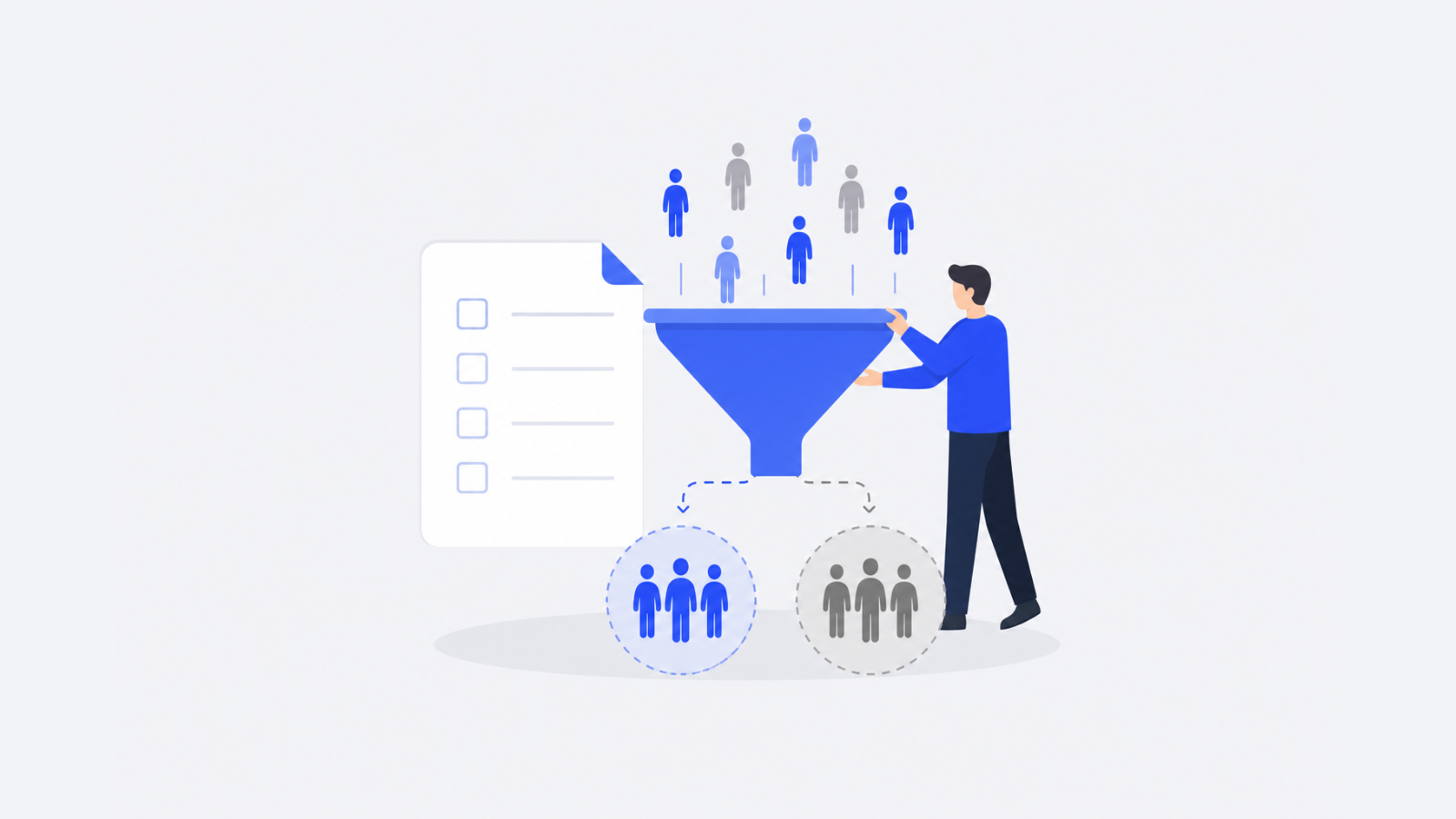
For an illustrative invoice study, prefer neutral questions about behavior:
- Ask, “When did you last compare two invoices?” instead of, “Do you find invoice comparison difficult?”
- Ask, “Which tools have you used for this task?” instead of, “Would you use a faster tool?”
- Ask, “What happened the last time you completed this process?” instead of, “Was the process easy?”
Use sensitive or detailed questions only when they affect eligibility. Explain why information is collected, how it will be used, and who can access it.
| Call element | What to state |
|---|---|
| Topic | A neutral description of the activity |
| Eligible experience | The relevant behavior, role, or recent event |
| Format | Interview, usability session, diary study, survey, or other method |
| Time | Duration and preparation required |
| Technology | Device, camera, microphone, software, or connection needs |
| Location or language | Any participation restrictions |
| Compensation | Amount or type, conditions, and timing |
| Privacy | Information collected and handling approach |
| Application process | How to apply and what happens next |
| Selection language | A statement that applying does not guarantee selection |
Do not describe the concept in a way that suggests the preferred answer. “We are testing a new and easier checkout” may attract people who already expect the checkout to be easy. Describe the activity instead.
Use consistent decision rules. Record whether an applicant was ineligible, eligible but outside a full quota, or waitlisted. If the rule changes, document the change before reviewing later applicants.
The participant recruitment guide describes profiles and eligibility screening. The checklists and example questions below are suggested planning tools, not a guarantee of representative results.
How do you set incentives and schedule participants?
Set compensation and scheduling rules before recruitment opens, then state them plainly. The amount, delivery method, eligibility conditions, and timing should not change from person to person without a documented reason.
There is no universal payment rate that fits every research activity. Build a proposed amount from the time requested, preparation, task difficulty, participant burden, audience access, location, and follow-up work. Check local guidance or your organization’s approved policy before publishing a figure.
Separate compensation from selection. Someone may apply without being selected, and a selected participant may receive the incentive only after completing the agreed activity. State both conditions in the call and confirmation.
Use a scheduling record with separate fields:
| Scheduling area | Record |
|---|---|
| Participant ID | A study code rather than a name where practical |
| Eligibility status | Eligible, ineligible, waitlisted, or pending |
| Quota status | Assigned group or quota position |
| Availability | Offered and confirmed times |
| Session format | Method and access requirements |
| Confirmation | Date and communication channel |
| Reminder | Date and method |
| Attendance | Attended, canceled, rescheduled, or no-show |
| Incentive status | Pending, approved, sent, or exception |
Offer only times the research team can support. Confirm the time zone, session format, preparation, contact method, and compensation terms in every appointment.
A waitlist can help when capacity is limited. Tell waitlisted applicants that selection is not confirmed, and use the same eligibility and quota rules when choosing a replacement.
How do you track participation quality and follow through?
Track fit and follow-through as documented process outcomes, not as subjective judgments about participants. Disagreement with a research assumption does not make someone a poor participant.
Use a unique participant ID and keep identifying information separate from research notes where practical. Limit access to people who need it, and define retention rules for each information type.
| Tracking area | What to monitor |
|---|---|
| Source | Where the applicant entered recruitment |
| Decision history | Why the applicant was accepted, rejected, or waitlisted |
| Contact history | Confirmations, reminders, and changes |
| Session outcome | Completed, partial, canceled, rescheduled, or no-show |
| Exception record | Approved departures from the original plan |
| Incentive workflow | Approval, delivery, failure, or correction |
| Closure | Whether the record is complete and access is closed |
Keep the recruitment profile separate from the participant log. The first defines the intended audience; the second records what happened.
Set a replacement rule before sessions begin. Decide who can replace a canceled participant, whether the replacement must match the same quota, and who approves the change. Record the decision rather than relying on memory.
Review outcomes by source. A channel that produces many applicants but few eligible participants may need clearer copy or a different audience definition. Frequent cancellations may point to unclear scheduling information, but do not assume the cause without reviewing the records.
Close the incentive process with a reconciliation. Match each completed session to the participant ID, approval status, delivery record, and exception note. A sent message alone does not prove that the incentive process is complete.
Turn the recruitment plan into a repeatable record
A useful recruitment plan connects four decisions: who qualifies, where you will reach them, how you will screen them, and how you will document completion. Keep those decisions distinct so a change in one area does not silently change the others.

Frequently Asked Questions
How do I recruit participants for research without leading them?
Use neutral descriptions and behavior-based screening questions. Ask what applicants did recently instead of suggesting the preferred opinion.
Which channel helps recruit participants for research with a specialized audience?
Start with a panel, agency, or relevant community that can reach the required audience. Apply the same screener and quotas across every source.
How can I recruit participants for research from existing customers?
Use a consented customer list and neutral outreach language. Track customer status because existing users may differ from the wider market.
What should a call for participants include?
State the topic, eligibility, format, time, technology, compensation, privacy details, and application process. Explain that applying does not guarantee selection.
How many screening questions should I use?
Use only questions that determine eligibility, quotas, or logistics. A focused screener supports more consistent decisions and reduces applicant effort.
How should I track incentives after research participation?
Connect the participant ID, completed session, approval, delivery date, and exceptions in one record. Restrict access to identifying and payment information.